>18000
Innovations since 2005
>60
Data points per individual innovation
~600
Types of innovation
~1000
Additional innovations per year
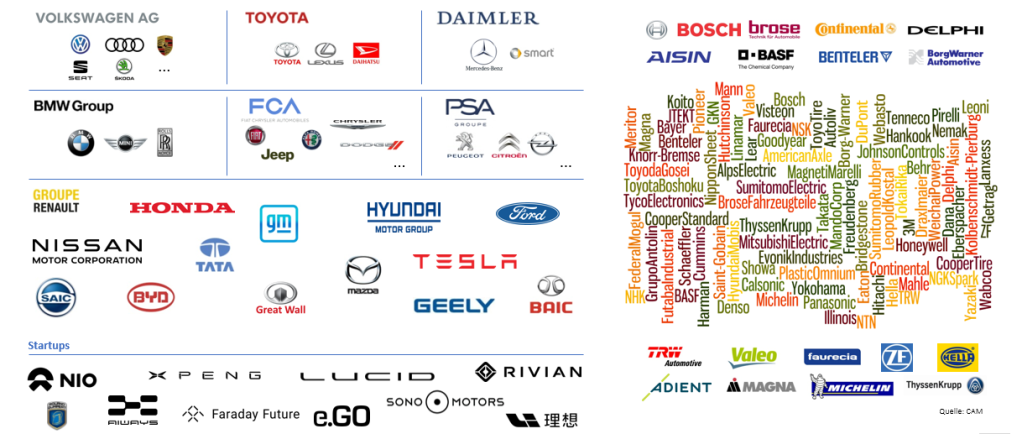
CAM identifys and analyzes the innovations of 30 global car manufacturers with about 100 brands in Europe, China, Korea, Japan and USA. Besides, the innovation activities of the TOP 100 automotive suppliers are analyzed on a regular basis.
Methodology and evaluation of innovations

In our studies, an innovation is defined as a technical or service novelty directly related to passenger cars that offers a tangible, additional customer benefit and is presented by OEMs to a broad (specialist) public, either as a product ready for series production or at least as a developed prototype.
Accordingly, to enter the database innovations must meet certain defined criteria:
First, and most important, innovations must have a noticeable additional customer benefit compared to the status quo.
Second, innovations must be communicated by the OEM so that they can perceived by a broad public.
Third, the maturity level must be at least equivalent to a prototype.
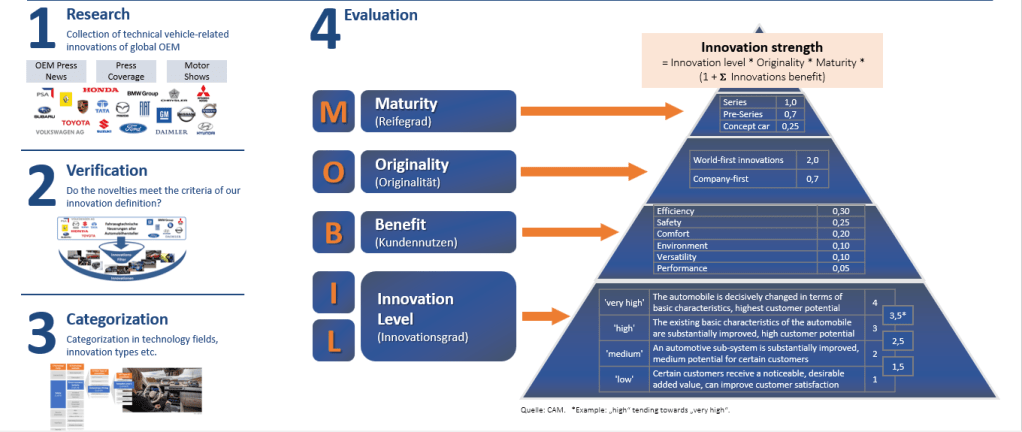
After der verification of the innovation, each innovation of the OEM is categorised using more than 60 attributes, like technology field, innovation type, segment, maturity etc.
In addition, innovations are systematically evaluated based on the M.O.B.IL approach. Each innovation gets a „score“ according to the maturity (series vs. concept), originality (world-first vs. company-first), benefit for the customer, and innovation level (low vs. high). For example, world-first innovations that are available in series are rated higher than me-too innovations only shown as a concept car. This results in an index value for each innovation, which can be aggregated into totals for car groups, brands or models as well as whole countries or world regions.
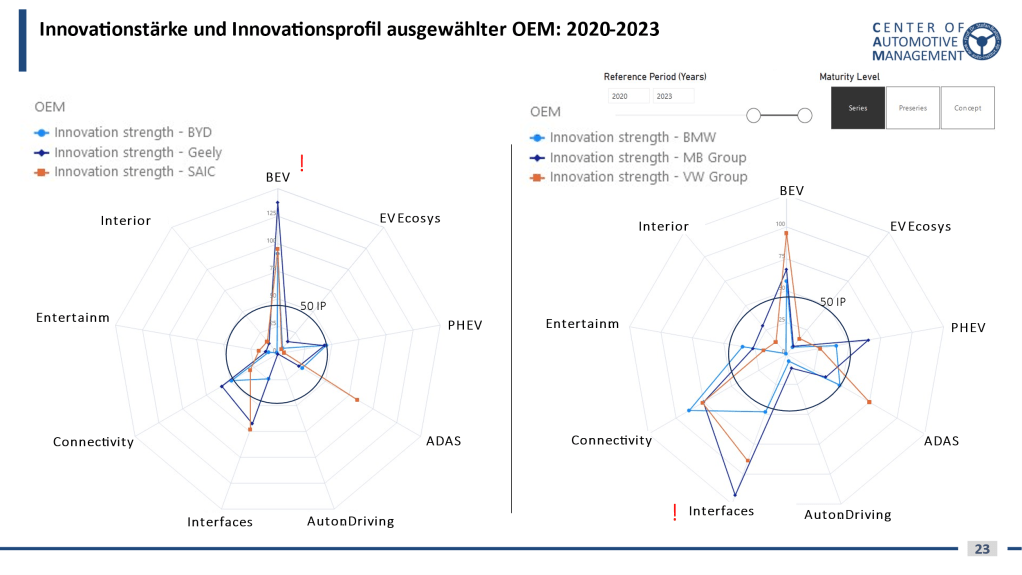
From the innovations presented in this and previous AutomotiveINNOVATIONS studies, the central developments in the industry in the various technology fields can be observed. At the same time, the competencies and specific strategic profiles of automotive manufacturers in the various fields of innovation become apparent.
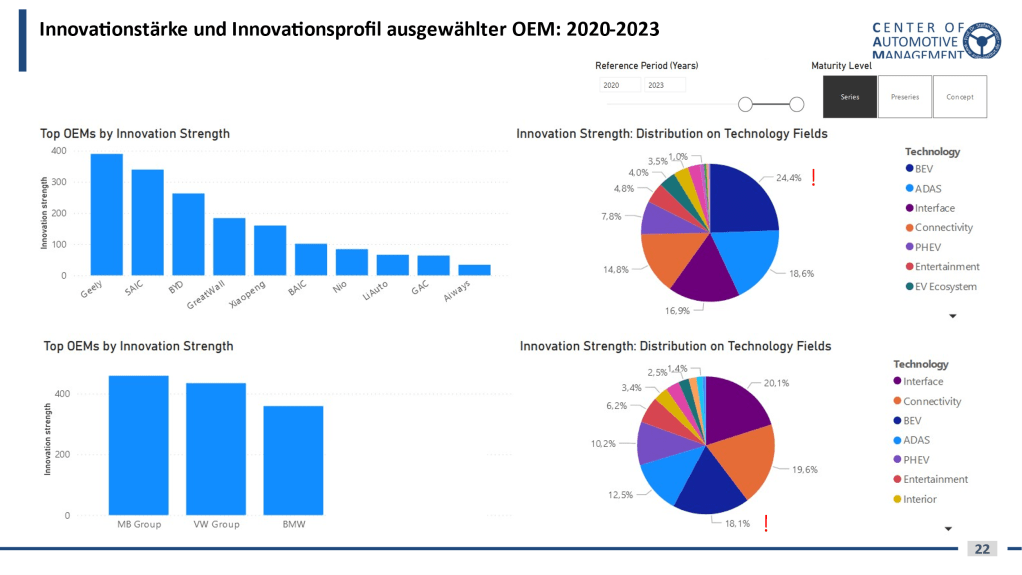
The vehicle technology innovations are recorded separately for the individual car manufacturers and brands. Thereby it is possible to compare the innovation performance of automotive groups according to quantitative and qualitative innovation criteria (degree of innovation, maturity, etc.). The evaluations create a transparent and reliable picture of the innovative strength of the global automotive groups and their brands.
 automotiveinnovations.de